Not sure who is still following this blog, considering that it's been over 2 years (!?) since my last post. I'd like to start it up again, since I liked tracking my garden and sharing what I learned with others.
BUT... I've already moved the contents over to Wordpress and will eventually be deleting the Blogger account. As much as I appreciate all the changes they've made to this site (much to my surprise), moving to WP will allow me to better manage everything. Plus I still prefer the interface and themes overall to Blogger.
SO... If you would like to continue following this blog in the future (and I do promise updates again), please redirect bookmarks, feed readers, etc. to http://crowingarden.wordpress.com/
3/26/13

8/1/11
Onions!
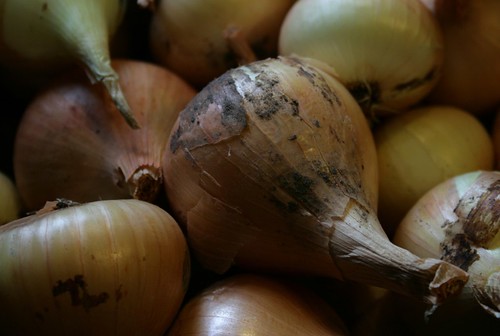
Finally, after weeks of waiting, drying, and curing, I have a firm total of onion's harvested.
5lb and 6oz.
Wow. I've tried growing onions in the past, but I've always had miserable luck. I've planted seeds for the 'Copra' variety at least twice but was never able to keep the plants going past August. If I got plants at all. My first attempt to grow yellow multiplier, or potato onions, was abortive. When planning this year's garden last winter, I decided to give sets a try. Previously I'd avoided going this route, since it's more expensive than buying seeds and a lot of books say that sets are more prone to disease. But I figure you should try exhaust every option before calling it quits.
So I purchased a set of 'Stuttgarter' onions from Pinetree Garden Seeds for a mere $5, certainly the cheapest you'll fine. In early spring I received a pound of tiny yellow onions, which I promptly planted, and in less than a month was entreated to nice healthy onion leaves. Not the spindly little things that wilted once June hit. Of course, I waited patiently for the leave to yellow, though we ended up stealing a few spring onions here and there out of desperation. As each plant started to go dormant, I removed them from the soil, let them dry on a screen for a day or two and then stored them in the mudroom to cure.
The flavor of the 'Stuttsgarter' variety is good. It has a good bite that's not too overpowering, making it good for fresh eating or cooking. The bulbs themselves are almost perfectly round and prone to flattening around the root. My onions did not get too big; the largest is maybe 2"-3" in diameter. According to one site I found, this seems to be normal. One onion of this size is just enough for two servings of most any dish (barring onion soup), but your mileage may vary. Sadly, a good lot of the onions I harvested are smaller, closer to shallot size. A few didn't grow to a useable size, so I'm planning to save these and experiment with planting them in fall.
I think that 5lb of this variety of onion will last 2-3 months, but it's hard to say. If I decide to make a big batch of French onion soup, they will certainly not last that long. We do get a reliable supply of onions from our CSA, which helps.
So...my first successful onion harvest. Truly, this is my most productive year.
7/28/11
Kale and Potato Hash
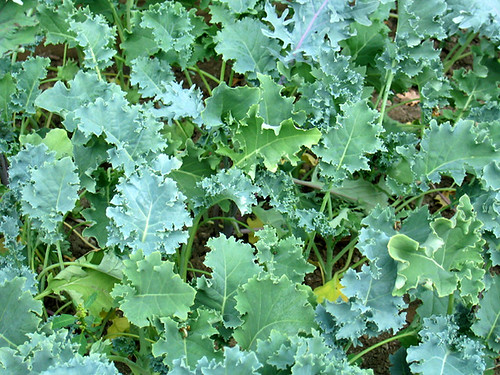
kale
Originally uploaded by kusine
Been a month since my last post, but the garden is still humming along. I've kept tracking harvests in my garden journal and am mostly pleased with how well everything's been doing this year. I promise some posts about the onion and chard harvests soon.
For now, I'd like to post about something I've been meaning to post about for a couple of weeks, which is the surprise harvests of kale. Specifically, the dwarf Russian kale I've been growing for the last couple of years (a variety you can find in the photo above). In 2009, kale seemed about the only crop my garden did really well at. Last year, after I moved the garden to another part of the yard, the kale crop was abysmal. Most of it succumbed to cabbage moths and aphids. This year, despite my lack of real effort or attention, the kale has done quite well. While a pound or two is hardly a bumper crop, it's certainly better than last year. I can't say whether it's my rotation plan or earlier start or covering of the crop in spring. The particular bed in which I'm growing was not amended with compost last fall, so it's certainly not that.
When you realize you have a much of kale, the next question is, "Well, how do I use this?" Growing up, the only time I ever saw kale was as a garnish on salad bars or plates. Once or twice I tried eating the stuff and was grossed out by the bitter taste. As I've gotten older and my palate has expanded, I discovered that kale and other bitter greens are actually pretty good when paired with the right ingredients and cooked a certain way. Personally, I like greens best when stirred into soups, but sautéing and braising are also excellent methods to tone down the bitter flavor. Kale especially has an affinity for garlic, sausage, and potatoes, and you'll find that many recipes capitalize on one or more of these ingredients.
Since we've been getting lots of produce from our CSA and plenty of other vegetables from the garden, I had to figure out another way to use kale besides dinner. I remembering seeing some breakfast hash dishes that featured the usual potatoes with some greens thrown in and, remembering that potatoes are awesome with kale, decided to invent a potato-kale hash. Mind you, I'm not very good at inventing my own recipes and prefer to tweak already existing recipes. Every Sunday I like to make a big breakfast for me and the SO as a special treat, which means I've gotten very good at frying potatoes and sausage without having to follow instructions. I've made up a few hashes and scrambles before, so coming up with a recipe wasn't much work. The first attempt was OK, but I added the freshly washed kale to the potatoes, which turned the potatoes a bit soggy. On the second attempt I removed the potatoes from the skillet, then added the kale, which turned out to be just the right fix. I thought I'd share the final recipe with anyone reading. It makes a nice breakfast for two and can be tweaked to suit your palate.
Kale and Potato Hash
1lb potatoes, any kind, cut into 1/2" cubes
1/2lb sausage or 4 slices bacon
1/2lb-1lb kale, sliced and washed
1 onion, halved and sliced or 1-2 cloves garlic, minced
2 eggs
- Put potatoes into saucepan and fill with enough water to cover. Heat to boiling, remove from heat, and drain.
- Meanwhile, heat skillet (cast iron is best) over medium heat. Cook sausage or bacon until browned and then drain on paper towel.
- Drain fat from pan, leaving a bit of a film. Add 3-4 tablespoons of oil to pan (peanut or canola is best, but olive oil is fine too). Add drained potatoes and cook for about 15-20 minutes over medium heat, turning as they brown. Cook until golden brown and then drain on paper towel.
- Add onions or garlic to pan and cook until fragrant and softened. Add kale to pan and cook, stirring, until wilted and water has cooked off. Add potatoes and sausage or bacon and turn heat to low, keeping warm while eggs cook. Season to taste.
- Fry eggs in separate pan, preferably over-easy or sunny-side-up so you have runny yolks to flavor hash. Serve hash with egg on top or on the side.
Notes:
- Some people will insist you can only use baking potatoes for frying. I use whatever's on hand. If using boiling or new potatoes, you might want to boil until the potatoes are a bit softened, or just increase overall cooking time.
- Spicy or sage sausages are best for this recipe, since they add lots of flavor.
- You can save as much fat from the sausage or bacon as you like. Personally, I find it doesn't lend the same crispness to the potatoes as vegetable-based oil, but I like to retain some of it for the flavor.
- Any kind of savory fresh herb, such as summer savory, sage, thyme, or rosemary, makes a great addition to this recipe. Just chop it up and add with the kale in Step #4. This is especially a good idea if you decide to omit the meat or eggs.
- If you hate fried eggs, you can modify the recipe into a scramble by beating the eggs beforehand and stirring into the kale and potatoes.
6/23/11
Harvests, 6/2-6/21
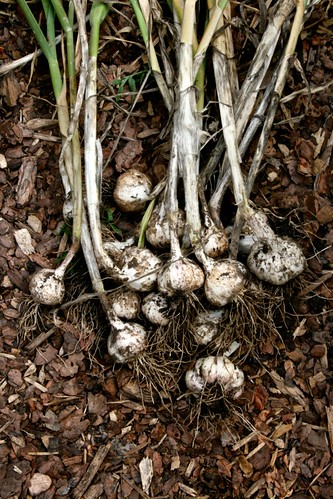
So I've been bad over the last 3(!?) weeks and not recording my harvests on this blog, but as usual there's always something going on in the garden and plenty of work to do. Since my last post, I have planted the tomatoes and laid more seed, focused some attention on my herb and flower borders, and tried to catch up on weeding. My sprained foot is slowly healing, but I am able to wear regular shoes now and do more than I was doing before.
Here's what I've harvested since my last post:
6/2
7 baby bok choys
6/4
small bunch of arugula
radish greens
6/5
4 cups 'Jericho' and 'Flashy Trout's Back' lettuce (chopped)
bunch of young yellow multiplier onions
small bunch of chives
6/17
1.5lb Swiss chard
6/19
3 baby 'Detroit Red' beets w/greens
6/21
17 'Shandong' garlic bulbs
As always, there are some missing odds & ends, such as the pod peas that I harvest each day, freezing the peas as accrued. It's also hard to say how everything gets used, though usually I can roughly guess.
Two of the baby bok choys filled out a basic chicken stir-fry, while the rest were frozen for use in a winter stir-fry (I was only able to manage one bag). The arugula was just beginning to flower during the last harvest and ended up in the usual spring pesto, while the radish greens were blanched and frozen to use later (roughly 2 bags worth). The lettuce probably ended up in a tasty taco salad.
I was most please with my last harvest of Swiss chard, which is probably the most I've harvested at once. The 'Fordhook' seems like a steady producer, though it is not getting as big as quickly as the 'Bright Lights' I planted last year. A volunteer chard plant, presumably the white/green from the 'Bright Lights' mixed, turned up in my pepper bed and has been producing enormous and wrinkly dark green leaves. Yum. About half the chard ended up in a pasta dish with an Italian sausage and tomato sauce my boyfriend really liked, while the other half was blanched and frozen the next day for later use.
And though the beets were pretty small, I went ahead and added them to the CSA beets I pickled on Sunday. Sadly, only one jar, but it will make an excellent side once fall hits.
The garlic I harvested only a couple days ago and was fairly impressed with the results overall. The bulbs seem to lose their purple streaks the longer they're left in the ground, and the hardneck in quite a few seems to have gone soft. A lot of the bulbs are smaller than I'd like, but the cloves are quite big. I already know that the taste of the 'Shandong' variety is excellent, spicy and strong without overpowering whatever dish they're used in. As recommended, I will be saving my largest bulbs for fall planting, so I can have as good a harvest next year.
As a final note, I started harvesting raspberries from the last year's canes yesterday. Last year I decided to cut the old canes, which supposedly directs energy to the new canes, resulting in a bigger late summer and fall harvest. Since I've been unable to do as much yardwork this year, I sorta let the old canes go. Honestly, I didn't notice a big difference in my harvest last year and was even a bit disappointed. The old canes are pretty heavy with berries, so I think that overall this is a better plan. as they say in netspeak, YMMV. Most of the raspberries I harvested yesterday ended up in this morning's breakfast smoothie. If I can gather enough in the next few days, they might end up in a dessert or preserves.
6/1/11
Harvest, 5/30-5/31
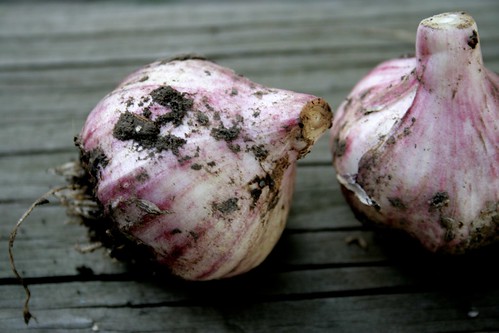
The harvest season is picking up in my garden, and there is much to be pulled up and picked. On Monday I dug up 14 garlic bulbs to make way for the tomatoes. It's a bit early for a full garlic harvest, as only one leaf layer has dried and they haven't yet bloomed, but there are still lots more left. 'Shandong' is also an early variety of hardneck garlic that should be harvestable before July. I'm drying half the bulbs and storing the other half in the refrigerator to use fresh. Of course, it's hard to track how the garlic will be used, since I use it in just about everything. It's an essential ingredient in Asian, Middle Eastern, Italian, and French cuisines--all favorites. So chances are it will end up in a lot of things. Maybe a stir-fry, maybe some hummus, maybe a batch of arugula pesto?
Last night's harvest was 8oz of spinach and chard leaves, which went into an spicy Indian-style shrimp curry served with brown basmati rice. The particular varieties I planted were 'Bloomsdale Longstanding' and 'Fordhook', both of which are heirloom varieties that seem to be doing well. While harvesting I noticed that the spinach was already going to seed, but I pulled off the seedheads and am hoping I'll be able to harvest more soon. Most of my cool-weather greens are starting to go to seed, so I have to harvest bok choy, raab, and more arugular before it gets much hotter.
The radishes, too, are on the verge of bolting, and yesterday I also managed to pull at least half a pound. The bulbs were still quite piddly (presumably due to the heavy rains we had last week), so I am just using them for greens. I'm thinking about freezing some greens, since right now there's an over-abundance from the garden and our CSA. On a side note, the 'Sparkler' cultivar strikes me as too finicky for my garden, and I will likely not be planting more after this packet is done. It may be that they're a fast-growing, early season variety, better suited to cooler conditions with less rainfall. I had better results last year with the 'French Breakfast' radishes and might give one of the varieties our CSA offers as well.
5/28/11
Harvest & Market, 5/16-5/28

This year I have been meaning to keep better track of my harvests so I have a better sense of what my garden produces. A couple of weeks ago, I did start weighing and measuring and recording those counts in my garden journal, but I have yet to post. Since that's what this blog is for, here's the rough count for the last two weeks:
10 oz 'Sparkler' radishes (with greens)
roughly 2 cups lettuce, chopped (a mix of 'Jericho' and 'Flashy Trouts Back')
2 small bunches of arugula
bunch of chive flowers
small bunch of yellow multiplier onion flower buds
8 oz 'Shandong' garlic greens and young bulbs
The radish greens were combined with the first batch of arugula for an arugula/radish pesto, while the radishes themselves ended up with the lettuce and chive flowers in a salad topped with sliced chicken. The second bunch of arugula was combined with another bunch I received from our CSA for more arugula pesto (a brilliant recipe from Serving Up the Harvest and my favorite way to enjoy it). The garlic greens ended up in a stir-fry, and I have been using the young bulbs in a variety of dishes.
This is Year 3 with the Fair Share Farm CSA, and we picked up our second week's worth of produce on Wednesday. We get too much to list here, but we've gotten plenty of radishes, lettuce, and greens. Along with the tasty hakurei turnips they offer each season, which are far sweeter than other turnips and are great eaten raw. I like to use them in stir-fries and salads as well.
Another habit I'd like to get back into is tracking our "take home" from the City Market, which we try to visit as often ass possible. Today we took home:
2 quarts blueberries
bunch of rhubarb
2 pints strawberries & a bunch of 'Chioggia' beets from Goode Acres (one of my favorite growers at the market)
bunch of large spring onions
appr. 1lb broccoli
honey from Busy Bee Acres in Odessa, MO
I'm planning on making some preserves from the blueberries, as well as making some rhubarb/strawberry preserves. The 'Chioggia' beets look like little bull's eyes and are far too pretty for pickling, so I am thinking about making some roasted beet chips (for which I will need a mandoline).
Right now, the garden is looking great, in spite of the wet/cool conditions of late. I am planning on harvests of spinach, chard, raab, and kale in the next week or two. And possibly an early harvest of some garlic to make way for the tomatoes. 'Shandong' is considered an early hardneck variety, so it's ready for harvest by June. I haven't seen any scapes yet, so I don't know. The radishes look great but aren't really producing bulbs. Some quick reading informed me that excess water may be the culprit. Guess we'll wait and see how things go!
5/3/11
What's going on in the garden?
Yesterday, after transplanting lots of plants and cleaning up a part of the herb border, I decided it would be nice to post some recent photos and do a virtual walk-through of the yard. The last couple weeks have been pretty tough. We had a good week or so of rain, during which time I twisted my ankle while at a bar with friends and ended up with a sprained foot. So once the rain cleared up, I was stuck on the couch reading, avoiding as much physical activity as I could. Thankfully, my condition in the last week has improved and due to a severe case of cabin fever, I've been trying to do as much in the garden as my foot will allow. A number of the photos I'm posting were taken prior to the rain and damaged foot, but I did manage to get a few great shots of the front garden, which I tend to neglect far too much.
And so, without further ado....
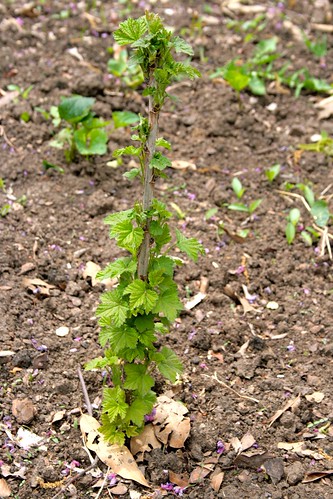
Here's one of the currant bushes I planted the first week or so of April. I can't recall the variety offhand, but I chose currant bushes for the backyard as they can tolerate partial shade and like mildly sloped locations for soil drainage (check and check). Much to my surprise, all three bushes are taking off and look even more fecund than in this photo. I won't be able to harvest until next year, however.
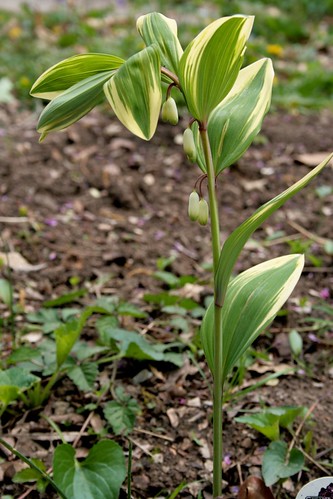
Nearby, there's a Solomon's Seal I planted last year. This variety has variegated leaves, which I thought would be more eye-catching than the old-fashioned variety.
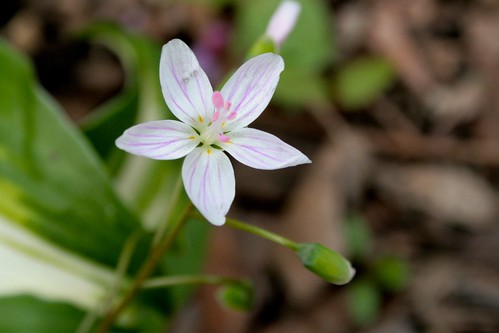
And some adorable unknown flower blooming beneath the serviceberry, also planted last year. The leaves and flowers looked very familiar, but I can't seem to place a name on it. Any guesses?
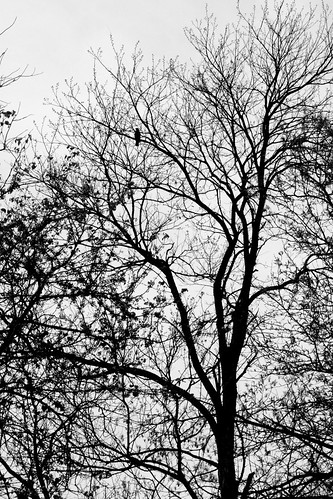
If you look closely up in this tree, you'll see one of our crows overseeing the backyard. I say "our crows" because we have (for the second year) a pair currently nesting in our spruce up front, which the other crows also gather in during the winter. It's a bit of serendipity that my favorite bird and the namesake of this blog sees fit to guard my little domain.
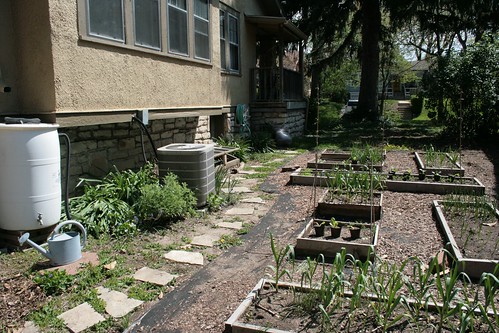
Moving on to the vegetable garden, here's a shot I took way back on April 20th. You can see that a lot of plants weren't yet in the ground. I like to harden my plants off by setting them roughly in the spot where they're going to be planted, so they get acclimated to the conditions.
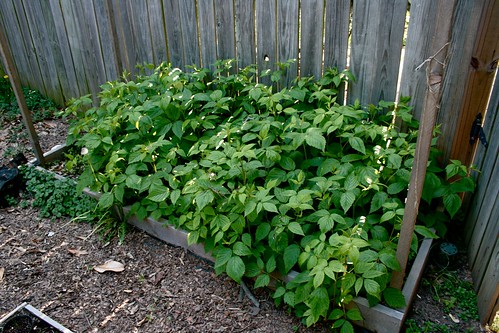
A photo of the raspberries from yesterday. This year I've decided to drill some holes into the posts and create a proper wire trellis system, since the twine I've been using tends to buckle after a few good rains.
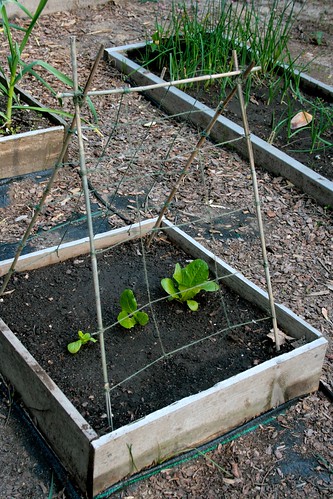
And here are some lettuce plants just after they've been planted, under a handmade trellis that will be used to support cucumbers and zucchini.
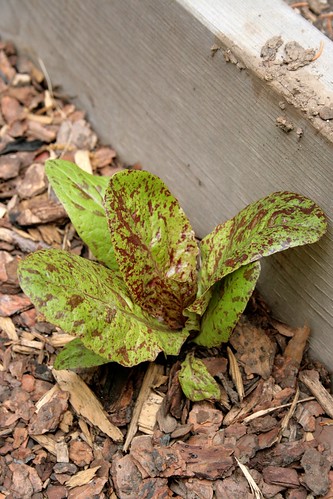
Here's a volunteer lettuce I spotted early in the season, along with several others of the 'Flashy Trout's Back' and 'Winter Density' variety. I'm so happy that they've decided to self-seed and will be sure to let this year's lettuce go to seed. My little ecosystem is humming along.
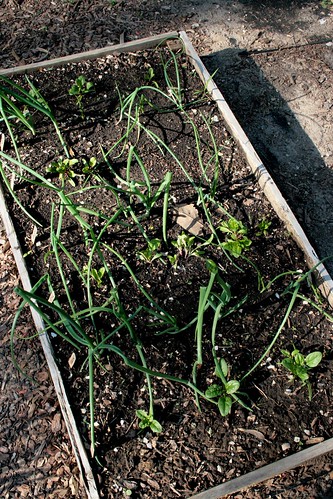
Onions, chard, beets, and spinach. I space my seeds when planting to conserve them as much as possible, usually 2-3 seeds which I thin later. I don't always do this, but it is a useful trick I learned from square-foot gardening that works for me. Not as useful for small seeds like carrots, but works great for big seedsed brassicas and chenopods.
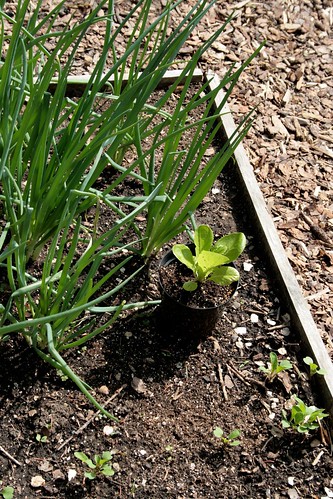
A close-up of one of the beds, with yellow multiplier onions, 'Jericho' lettuce in the pot, and arugula seedlings just sprouting. This is my second attempt at growing the yellow multipliers from bulbs in autumn. The last time I tried this in 2009, my bulbs ended up rotting. This year I'm taking the advice of Territorial Seeds and not clipping the leaves, which can draw water to the bulb. Live and learn, eh?
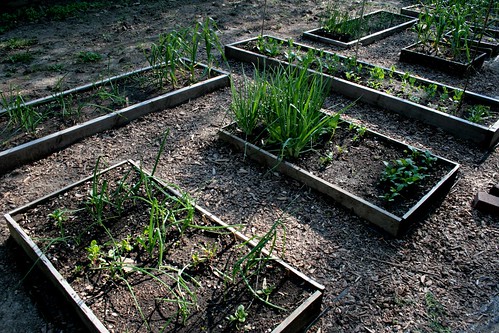
A view of the same beds from the east. I'm impressed with how lush the radishes look, especially since they have been getting smooshed by squirrel and kitties.
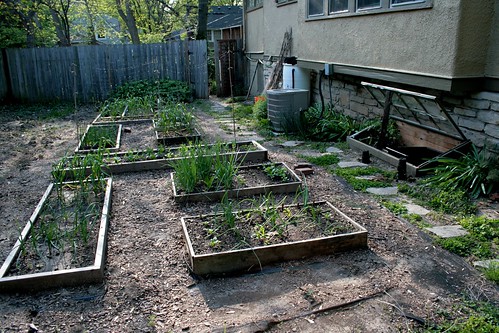
Full view with path, cold frame, and rain barrel. As you can see, things are a bit of a mess. We still haven't fixed the layout of the flagstones or gotten the mulch over all the landscape fabric. The farthest south path was also destroyed last autumn when our new neighbors had to repair a pipe running through the yard and will need to be redone.
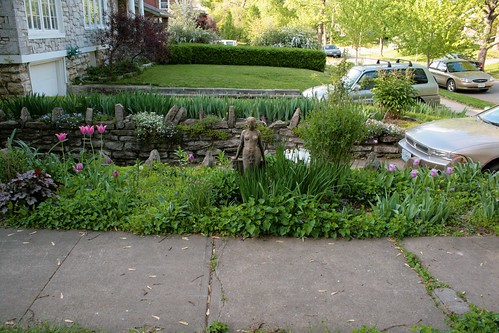
But let's not talk of these things. Let us move on to the lovely front border. Again, a bit of a mess, as I've not cleared out all the violets and weeds. But I am happy with how everything's filling out. It looks like more of a thought-out garden than when we bought the house in 2006.
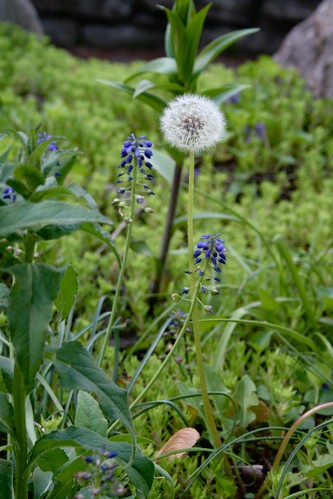
As I said, I have not cleared out all the weeds. At least they're pretty, though.
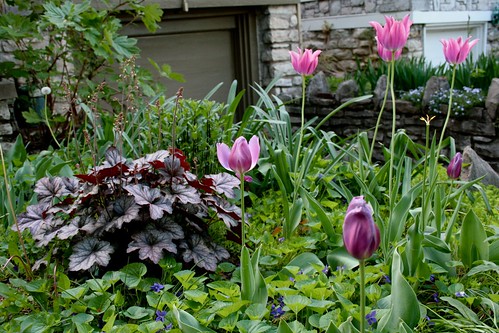
I'm in love with the color combo here of the reddish violet tulips and burgundy/silver heuchera leaves. The tulips are the lily-flowered 'Ballade' variety, which starts out with more white on the tips.
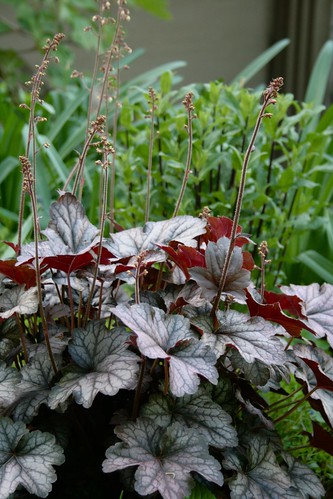
Another shot of the 'Color Dream' heuchera. Despite their current ubiquity, I love these plants. The frilly leaves and soft little flowers. And so many colors to choose from. I might have to plant more.
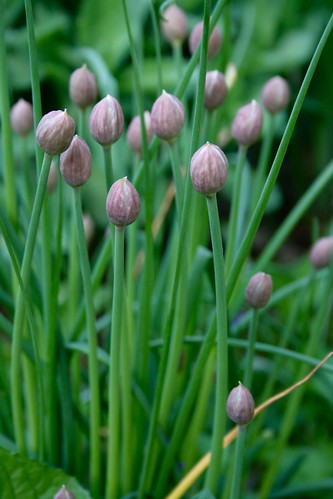
I also love chive flowers. After dividing up some plants in the herb garden last year, I brought a few into the front border. The buds are almost as interesting as the globe-like flowerheads. They're edible, too.
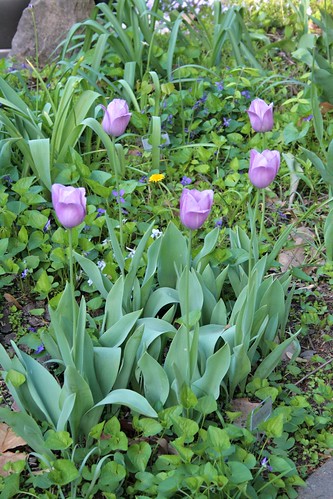
Back to the tulips! The 'Violet Beauty' cultivar looks especially gorgeous this year. I've noticed that these and the 'Ballade' are the more dependable than my 'Cum Laude' and 'Queen of Night' tulips in terms of perennializing. I've also noticed that 'Violet Beauty's has somewhat grayish leaves, which I find very attractive against the lime green sedum ground cover.
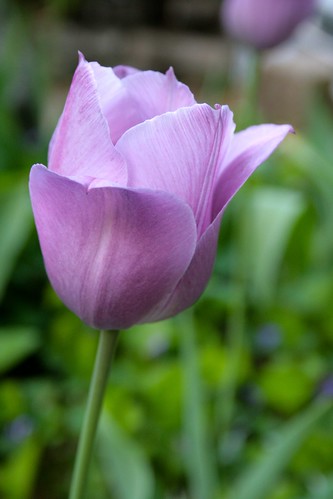
The flowers are even more gorgeous close-up. Look at that veining! Sigh...
Anyway, hope you enjoyed the tour. More to come soon!
And so, without further ado....
Here's one of the currant bushes I planted the first week or so of April. I can't recall the variety offhand, but I chose currant bushes for the backyard as they can tolerate partial shade and like mildly sloped locations for soil drainage (check and check). Much to my surprise, all three bushes are taking off and look even more fecund than in this photo. I won't be able to harvest until next year, however.
Nearby, there's a Solomon's Seal I planted last year. This variety has variegated leaves, which I thought would be more eye-catching than the old-fashioned variety.
And some adorable unknown flower blooming beneath the serviceberry, also planted last year. The leaves and flowers looked very familiar, but I can't seem to place a name on it. Any guesses?
If you look closely up in this tree, you'll see one of our crows overseeing the backyard. I say "our crows" because we have (for the second year) a pair currently nesting in our spruce up front, which the other crows also gather in during the winter. It's a bit of serendipity that my favorite bird and the namesake of this blog sees fit to guard my little domain.
Moving on to the vegetable garden, here's a shot I took way back on April 20th. You can see that a lot of plants weren't yet in the ground. I like to harden my plants off by setting them roughly in the spot where they're going to be planted, so they get acclimated to the conditions.
A photo of the raspberries from yesterday. This year I've decided to drill some holes into the posts and create a proper wire trellis system, since the twine I've been using tends to buckle after a few good rains.
And here are some lettuce plants just after they've been planted, under a handmade trellis that will be used to support cucumbers and zucchini.
Here's a volunteer lettuce I spotted early in the season, along with several others of the 'Flashy Trout's Back' and 'Winter Density' variety. I'm so happy that they've decided to self-seed and will be sure to let this year's lettuce go to seed. My little ecosystem is humming along.
Onions, chard, beets, and spinach. I space my seeds when planting to conserve them as much as possible, usually 2-3 seeds which I thin later. I don't always do this, but it is a useful trick I learned from square-foot gardening that works for me. Not as useful for small seeds like carrots, but works great for big seedsed brassicas and chenopods.
A close-up of one of the beds, with yellow multiplier onions, 'Jericho' lettuce in the pot, and arugula seedlings just sprouting. This is my second attempt at growing the yellow multipliers from bulbs in autumn. The last time I tried this in 2009, my bulbs ended up rotting. This year I'm taking the advice of Territorial Seeds and not clipping the leaves, which can draw water to the bulb. Live and learn, eh?
A view of the same beds from the east. I'm impressed with how lush the radishes look, especially since they have been getting smooshed by squirrel and kitties.
Full view with path, cold frame, and rain barrel. As you can see, things are a bit of a mess. We still haven't fixed the layout of the flagstones or gotten the mulch over all the landscape fabric. The farthest south path was also destroyed last autumn when our new neighbors had to repair a pipe running through the yard and will need to be redone.
But let's not talk of these things. Let us move on to the lovely front border. Again, a bit of a mess, as I've not cleared out all the violets and weeds. But I am happy with how everything's filling out. It looks like more of a thought-out garden than when we bought the house in 2006.
As I said, I have not cleared out all the weeds. At least they're pretty, though.
I'm in love with the color combo here of the reddish violet tulips and burgundy/silver heuchera leaves. The tulips are the lily-flowered 'Ballade' variety, which starts out with more white on the tips.
Another shot of the 'Color Dream' heuchera. Despite their current ubiquity, I love these plants. The frilly leaves and soft little flowers. And so many colors to choose from. I might have to plant more.
I also love chive flowers. After dividing up some plants in the herb garden last year, I brought a few into the front border. The buds are almost as interesting as the globe-like flowerheads. They're edible, too.
Back to the tulips! The 'Violet Beauty' cultivar looks especially gorgeous this year. I've noticed that these and the 'Ballade' are the more dependable than my 'Cum Laude' and 'Queen of Night' tulips in terms of perennializing. I've also noticed that 'Violet Beauty's has somewhat grayish leaves, which I find very attractive against the lime green sedum ground cover.
The flowers are even more gorgeous close-up. Look at that veining! Sigh...
Anyway, hope you enjoyed the tour. More to come soon!
4/17/11
In Defense of the Lowly Dandelion
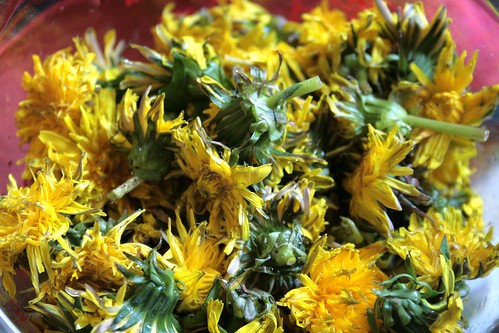
Spring is in full swing here in Kansas City and the flowers are in full bloom. Though the crocuses have now faded, the mid-season tulips are out, along with the daffodils and muscari. The spring "weeds" are in full force, too--the purple and blue ground ivies, the violets, and the dandelions. I say "weed" because I don't think in the terms of many gardeners; I try to assess each interloper by its function or aesthetic value. For instance, ur yard is full of violets because I love the leaves and the flowers, and they fill in the spaces the grass refuses to inhabit. I usually only remove them to make way for other plants. The weeds I dig up are the ones I have no use for.
Everyone knows that the lowly dandelion is the worst "weed" of all, so of course it is the one most vigilantly combated. An overgrown dandelion can really ruin the look of a flowerbed, and once it's gone to seed you're guaranteed another batch to dig up in the summer. Thus the cycle never ends.
As for myself, I've learned to love the lowly dandelion and don't struggle much to keep them at bay. Growing up, I was always charmed and fascinated by fields of the cheery yellow flowers and the shimmer little seed globes that fell apart in the wind. When I read Bradbury's Dandelion Wine in my teens I was mesmerized by his description of a family gathering the flower heads to make wine:
The boys bent, smiling. They picked the golden flowers. The flowers that flooded the world, dripped off lawns onto brick streets, tapped softly at crystal cellar windows and agitated themselves so that on all sides lay the dazzle and glitter of molten sun.I never knew anyone who made their own dandelion wine (or any wine, for that matter), but I always imagined eventually tracking down a bottle or making my own.
"Every year," said Grandfather. "They run amuck; I let them. Pride of lions in the yard. Star, and they burn a hole in your retina. A Common flower, a weed no one sees, yes. But for us, a noble thing, the dandelion."
The dandelion, despite its common weediness, is an immensely useful plant with a history of human cultivation going back some centuries. Every part of it is edible and considered to have medicinal properties. The bitter leaves, mildest before the plant has flowered, are similar to arugula and can be eaten raw in salads or sauteed with some oil and spices. The raw flavor is too strong for my tastes, but I love using it as a replacement for arugula in a pesto recipe from Serving Up the Harvest. The mature root of a dandelion can be dried or roasted, then ground into a coffee substitute or additive similar to chicory, which is popular in New Orleans and France. Last year I ground a bit with my usual coffee and found it added a very subtle but nice smoky flavor. And of course, there are the blossoms, which are most often used to make dandelion wine, something that I am finally attempting this year. Lacking proper winemaking equipment, I sought out a basic home recipe and found this one from Texas Cooking. I can't tell you yet whether it worked, but I should know in a few months.
Another thing you can make from dandelion blossoms is jelly (or preserves), which sounds a bit odd but turns out to be quite good. I made up my own recipe using Pomona's Universal Pectin based on this recipe for violet jelly. The process is basically the same (and quite similar to making dandelion wine): you make an infusion by pouring boiling water over the blossoms, then let it steep overnight to deepen the flavor. Once the infusion is made, it is similar to any other jelly. Here is the specific recipe I came up with:
Dandelion Jelly
1 C dandelion blossoms
1 C boiling water
2 TB lemon juice
1/2 tsp calcium water
1/2 C sugar
1/2 tsp Pomona Universal Pectin
1. Wash dandelion blossoms thoroughly and remove any stems. Pour boiling water over blossoms and let steep up to 24 hours, covered.
2. Pour infusion into non-reactive pan and then add the lemon juice and calcium water. Mix together sugar and pectin.
3. Bring infusion to boiling and pour in pectin mixture. Bring back to boiling and cook for 1 minute. Pour into one pint sterilized jar or two half-pint jars; process for 10 minutes.
The flavor of this jelly is interesting, sort of light and floral and "dandelionesque," with none of the associated bitterness. As noted in the base recipe, this can be adapted to any other kind of floral/herbal jelly (if using flowers, obviously make sure they're edible and not sprayed with pesticides).

Besides the practical uses of dandelion as a food, there is evidence to suggest that the oft-loathed taproots may actually be beneficial, drawing up nutrients that might otherwise be locked in deeper soil layers. Taproots can also be a helpful way of breaking up dense, clay-ridden soils.
I'm not suggesting that every gardener stop pulling up these lovely and useful weeds altogether. We all have a certain aesthetic standard we'd like to maintain in our gardens, and too many weeds can disrupt our enjoyment. Nonetheless, it is surprising how little people consider the practical value of the plants growing around them (many of which, like the dandelion, have escaped cultivation) and spend all their time fighting the poor things in a quest for the perfectly neat lawn. Permaculture asks us to rethink the ways we live within our environment, whether there are not more harmonious ways to deal with it. So I'll keep letting a few dandelions grow and enjoy what they have to give.
P.S. For an overview of uses and lore associated with the dandelion, A Modern Herbal is worth checking out. Also information on various wildflowers and herbs with medicinal/culinary value. One of my favorite online plant resources.
3/16/11
New Seeds for 2011
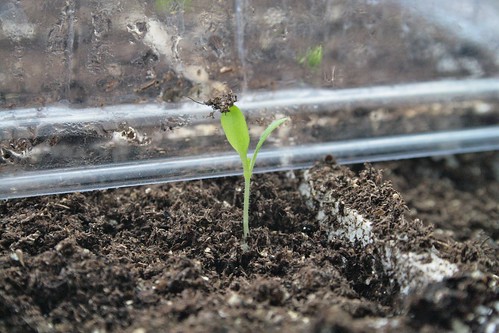
I order my seeds a month ago, but I'm running a bit late this year and only just planted them last week. This evening I checked the soil in the garden and, even after a snow on Monday, the temperature registered nearly 60F. So it would appear that spring is nearly upon us, hinting at the harvest to come.
This evening was actually my first harvest of the year, though I must admit I cheated. I pulled this cup or so of lettuce from the cold frame:
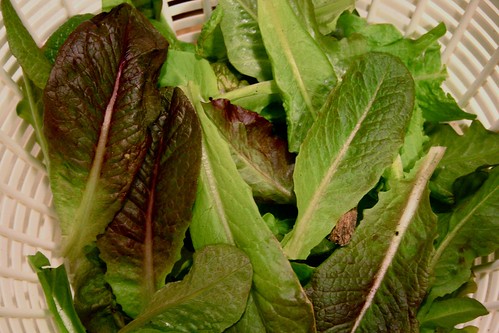
Yes, the lettuce survived throughout the entire winter in the cold frame. Through the snow and ice and 0F temperatures. Some minor burning from the frost (and heat, as the temperature has warmed), but the cold frame continues to be one of the best investments we've made into this garden.
Speaking of investment, I bought quite a lot of seeds this year, due in part to all the expired seed packets in my stash. I was unable to keep to my $50 minimum, but I didn't go too far over.
Here's this year's haul:
From Pinetree Garden Seeds
Arugula (Roquette)
Beet, "Detroit Red"
Cauliflower, "Amazing"
Cucumber, "Miniature White"
Melon, "True Charenais"
Parsley, "Prezzmelo Gigante d'Italia"
Pumpkin, "Musquee de Provence"
Rutabaga, "Wilhelmsburger"
Spinach, "Bloomsdale Long Standing"
Summer Squash, "Striata d'Italia"
Sweet Pepper, "California Wonder"
Swiss Chard, "Fordhook"
From Seed Savers Exchange
Foxglove, "Giant Spotted"
Leek, "Giant Musselburgh"
Hot Pepper, "Fish"
From Territorial Seed Company
Basil, "Aroma"
Broccoli, "Purple Peacock" (actually a sprouting broccoli/kale cross)
Hot Pepper, "Mulato Isleno"
Lettuce, "Jericho"
Shell Peas, "Canoe"
As usual, I stuck with my favorite mail order seed companies, Territorial and Pinetree. A couple of years ago, I tried some seeds from John Scheeper's, which are beautifully packaged and of good quality, but much like Burpee their prices tend to run a bit high for my taste. I looked into a few other companies and finally decided to try some seeds from Seed Savers Exchange, who do much to support plant diversity, a cause that interests me a great deal. Not only that, they're currently selling the "Fish" variety of hot pepper I've been itching to get my hands on for a few years now.
I believe the "Aroma" basil is an F1 hybrid, but otherwise I stuck with open-pollinated varieties, from which I can collect seed and grow more plants that will remain true to type.
The melons and pumpkins are not something I'll be able to grow in my boxes, but I believe they'll work out nicely in the border among the flowers and herbs. Another of my goals this year was to try interesting/exotic varieties I've not yet tried, along with certain plants that I've yet to grow, such as leeks and rutabaga. Additionally, I looked for multi-purpose plants (like the rutabaga or the "Purple Peacock" sprouting broccoli) and plants with long production seasons (such as the heat-tolerant "Jericho" lettuce or Swiss chard).
The soil outside appears to be warm enough that I can start the peas this weekend. With the right planning, I should be able to harvest from my vegetable garden in another month or so. Without the cold frame, of course.
What will you be growing this year?
1/11/11
2010 in Review
Overall, 2010 was perhaps my best year in the vegetable garden. While I still have a ways to go towards self-sufficiency, I completed a couple of big projects and had some decent yields. As with last year, the weather was wet and often predictable, with a mild autumn that extended the season somewhat. I didn't spend much time in my other little gardens, but I did start a woodland garden in the backyard and began the base for my grotto.
The Cold Frame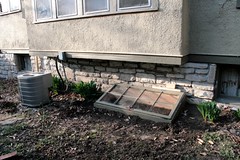
In February and March, we built a cold frame from an old window cedar 2x4's and installed it just as the soil was beginning to warm. You can read more about building and installing the cold frame in this entry. In April I was able to put out some seedlings started in the basement, but as soon as the temperature edged towards the 60's and 70's, nearly all of them were fried. First lesson learned. Always keep the lid of your cold frame open when it starts getting warm.
I continued playing with my cold frame through the year, setting seedlings out to begin hardening off and planting seeds inside to see what would grow. In September and October, I planted a hardy lettuce mix and some lettuce seedlings, which I've been closely monitoring since. Even after temperatures began dropping in November and a Thanksgiving snow, the lettuce plants persisted and are still holding up. Admittedly, I am growing cold weather varieties and it's turning out to be a mild winter, but I hardly expected such success.
Relocating the Potager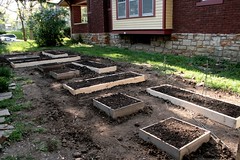
In March and April, we tore down the old vegetable garden and built new frames for the new location on the south side of the house. I wrote an entry about the process right after we finished. It was a lot of hard work, but it seems to have been worth it. In general, my plants have been stronger and not as leggy, and I've had better yields with larger fruits, especially with the sun-loving plants like bush beans and chile peppers. Because I got a late start transplanting and lost many plants in the cold frame, I was not able to grow as much as I planned, and I ran into many of the same issues with squirrels and insect pests. Nonetheless, I was harvesting cold weather greens into November and digging up parsnips in December, so I'd say it that the new potager is an all-around success.
Growing Successes
First, the new varieties I purchased this year from Territorial and Pinetree...
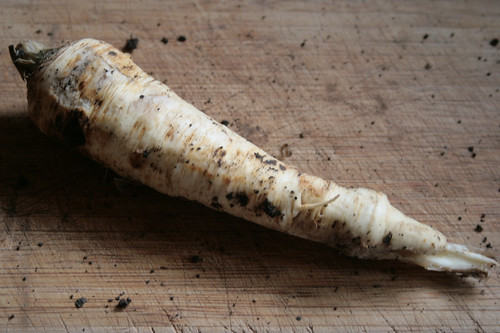
2010 was the first year I grew parsnips, a staple vegetable in Old World cuisine that has largely fallen out of favor, despite some renewed interest in the foodie community. Part of the reason might be that they require a long season to grow to full size and cold weather to fully develop the sugars that give them their distinct flavor. I grew the "Harris Model" parsnip, an open-pollinated variety noted for its flavor and dependability. Before we got a hard frost, I dug up a small root and gave it a taste, only to discover that it was starchy and lacking the pleasant sweetness of a store-bought parsnip. After the ground froze in December, I fought through the hard soil, broke a couple of roots, and was happy to taste the sweet root I had been seeking. Altogether, I yielded 2lb of parsnips, not a lot for a 2'x2' plot of soil, but enough for a couple of meals. The flavor of a fresh parsnip is well worth the time and effort, though.
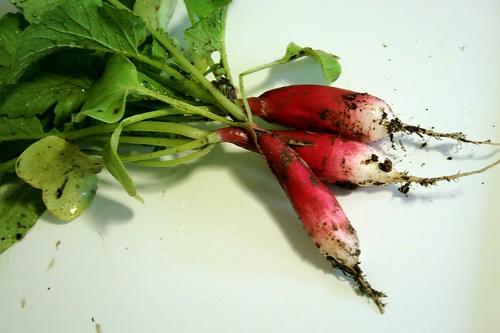
Another plant I grew for the first time was the common radish, which I found fast-growing and unbelievably useful. The heirloom "French Breakfast" cultivar doesn't produce a big meaty radish, but the flavor and texture are distinct, far better than any store-bought variety. I noticed that the flavor of the young radishes was very strong and would be a good addition to salsa. The mature flavor was more delicate and tasty on buttered bread. Much like turnips, the greens of the radish are edible, making them doubly useful in the vegetable garden. Combined with arugula or dandelion greens, they made an excellent spring pesto.
Another successful crop this year was the "Bright Lights" Swiss chard. While I lost the last season's crop to bugs, I was able to harvest a couple of decent sized batches. Chard is one of my favorite vegetables, one I love braised in pasta dishes or folded into a gratin. The "Bright Lights" mix includes a wide range of colors, from yellow to red to green, so it looks just as lovely as it tastes.
In August I ordered a couple of "winter" seed mixes from Territorial, the "Provencal Winter Mix" and "Arctic Tundra Blend." Both were successful, and a few plants started from these mixes are holding up well inside the cold frame. From the Provencal mix, I harvested three French lettuce varieties (Continuity, Salad Bowl, and Brunia), chervil, and lots of endive and roquette (otherwise known as arugula), which I used in several batches of pesto. Territorial does not specify the varieties in the Arctic Tundra blend, but it seems to be a mix of red and green looseleafs. I kept a close watch on the plants as the temperature dropped, and they seemed to survive the nights down to freezing well enough. If you're looking for dependable late season crops and like salad greens, you might want to try these blends.
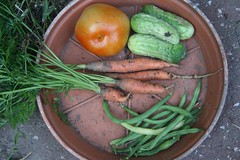
As far as seeds saved from last year are concerned, I had wonderful luck with carrots this year, producing enough for several meals. I really loved the "Mokum" variety I bought from Territorial in 2009, which grows quickly and has a beautiful sweet flavor. I also planted the "Danver's Half-Long," a long season carrot better suited to storage use; the roots were noticeably thicker and took quite at least a month longer for the flavor to develop (even then I didn't find it especially sweet compared to the Mokum).
I also got better yields on the Jade and Gold Crop bush beans I planted, in addition to the black turtle beans I planted late season. This was also the best year I've had for jalapeno peppers. I am not sure if pruning off new leaf growth aided in the higher yields, especially since the bulk of the crop came later than usual. Nonetheless, I had jalapenos coming out of my ears! Herbs were another big success this year, and I had more basil, parsley, dill, and cilantro/coriander than ever.
Semi-Successes
I was able to harvest a few baby fennel bulbs of the "Perfection" variety. Because my fennel got a late start this year, my expectations were pretty low. Flavor was typical licorice-y fennel flavor. Can't say much about seed flavor/production, as I was growing only for bulbs.
Yields for shelling and snap peas weren't that great either, but I started them at least a month late, so the bushes started to dry up before they hit their peak.
Tomatoes were another disappointment this year. Despite getting a few tomatoes and ending up with plenty of green ones to last through October, most succumbed to squirrel (and possibly bird) attacks during our weekends (and weeks) out of town. I did make an effort to purchase varieties that were new to me, but since I was forced to pick most early, I'm not sure if I got optimal color and flavor. The "Country Taste" hybrid was a solid beefsteak variety with a meaty texture and classic tomato flavor that I would gladly use as my main crop variety. The "Japanese Black Trifele" was an interesting heirloom variety with a flavor that's hard to describe, sort of smokey sweet with a bit of bite. I was already familiar with the "Chocolate Cherry" via our CSA; it's a cherry variety with a flavor similar to "Cherokee Purple." And lastly, while I did not get a chance to taste a really fresh fruit, I did enjoy the "Cuore di Bue" oxheart, which is low in seeds and juice and has a wonderfully tasty acidity that would make a brilliant sauce. Definitely trying this one again.
Another thing I had only middling luck with this year was broccoli. I was able to harvest a few tiny heads and side shoots, and that's about it
Failures
Perhaps the major failure of 2010 was my attempt to grow rhubarb from seed. Based on my reading, it's a notoriously difficult plant to grow from seed, since it is so slow to germinate. Twice I planted the seeds to no avail. Because I am so committed to the idea of growing perennial food plants, this year I'm going to buy some crowns and give it another go. I will have my rhubarb pie!
Otherwise, I cannot seem to grow spinach. I tried three varieties this year--"Giant Noble," "Viroflay," and "Giant Winter"--and had only disappointing results. I can get the seeds to germinate, even grow a few little leaves, but they always end up dying before I get any spinach. Maybe this year I'll have better luck.
Not quite failures but not quite in the realm of success, the squash plants I started this year took off like wild fire but were quickly quelled by infestations of squash bugs and vine borers, which destroyed the fruits and wilted the plants to nothing. In a similar vein, my cabbage and cauliflower transplants grew quite big yet failed to produce anything. My kale, raab, bok choy, and collards also did quite badly. But again, late start, inconsistent use of covers, etc.
Plans for Next Year
1. Make better and more consistent use of floating row covers. These are honestly the best technique I've used for keeping cabbage butterflies off my cole crops and, used consistently, eliminate a lot of the headache of picking off caterpillars and spraying aphids. Back in August I researched remedies for squash bugs and vine borers and learned row covers are just as useful for young squash plants, so I'll be testing this out as well.
2. Spend more time in other parts of the yard. Yes, I started my woodland garden in the backyard and added a few more plants to the south border, front border, and rock garden, but overall I neglected various chores and didn't allow myself to enjoy the space surrounding our house. The front border, especially, needs a major overhaul.
3. Keep building the woodland garden. I planted a serviceberry tree, lots of hostas, a Solomon's Seal, and a lily of the valley. This year I am purchasing some currant bushes. Some other plants I'd like to add: wild ginger, jack in the pulpit, monkshood, cyclamen, hellebore, some kind of sedge, and some kind of fern.
4. Finish the grotto. I've been putting off this project for two years now. Except for the mortar, I have every supply necessary. No more excuses.
5. Plant more perennial fruits/vegetables. I've already decided on currant in the woodland garden. Other options include: rhubarb, asparagus, Jerusalem artichokes, Good King Henry, and sorrel. Need more Zone 5B options.
As always, patience. Watch and learn and continue working towards self-sufficiency. 2010 was a pretty good year for gardening. Here's hoping 2011 is even better!
The Cold Frame
In February and March, we built a cold frame from an old window cedar 2x4's and installed it just as the soil was beginning to warm. You can read more about building and installing the cold frame in this entry. In April I was able to put out some seedlings started in the basement, but as soon as the temperature edged towards the 60's and 70's, nearly all of them were fried. First lesson learned. Always keep the lid of your cold frame open when it starts getting warm.
I continued playing with my cold frame through the year, setting seedlings out to begin hardening off and planting seeds inside to see what would grow. In September and October, I planted a hardy lettuce mix and some lettuce seedlings, which I've been closely monitoring since. Even after temperatures began dropping in November and a Thanksgiving snow, the lettuce plants persisted and are still holding up. Admittedly, I am growing cold weather varieties and it's turning out to be a mild winter, but I hardly expected such success.
Relocating the Potager
In March and April, we tore down the old vegetable garden and built new frames for the new location on the south side of the house. I wrote an entry about the process right after we finished. It was a lot of hard work, but it seems to have been worth it. In general, my plants have been stronger and not as leggy, and I've had better yields with larger fruits, especially with the sun-loving plants like bush beans and chile peppers. Because I got a late start transplanting and lost many plants in the cold frame, I was not able to grow as much as I planned, and I ran into many of the same issues with squirrels and insect pests. Nonetheless, I was harvesting cold weather greens into November and digging up parsnips in December, so I'd say it that the new potager is an all-around success.
Growing Successes
First, the new varieties I purchased this year from Territorial and Pinetree...
2010 was the first year I grew parsnips, a staple vegetable in Old World cuisine that has largely fallen out of favor, despite some renewed interest in the foodie community. Part of the reason might be that they require a long season to grow to full size and cold weather to fully develop the sugars that give them their distinct flavor. I grew the "Harris Model" parsnip, an open-pollinated variety noted for its flavor and dependability. Before we got a hard frost, I dug up a small root and gave it a taste, only to discover that it was starchy and lacking the pleasant sweetness of a store-bought parsnip. After the ground froze in December, I fought through the hard soil, broke a couple of roots, and was happy to taste the sweet root I had been seeking. Altogether, I yielded 2lb of parsnips, not a lot for a 2'x2' plot of soil, but enough for a couple of meals. The flavor of a fresh parsnip is well worth the time and effort, though.
Another plant I grew for the first time was the common radish, which I found fast-growing and unbelievably useful. The heirloom "French Breakfast" cultivar doesn't produce a big meaty radish, but the flavor and texture are distinct, far better than any store-bought variety. I noticed that the flavor of the young radishes was very strong and would be a good addition to salsa. The mature flavor was more delicate and tasty on buttered bread. Much like turnips, the greens of the radish are edible, making them doubly useful in the vegetable garden. Combined with arugula or dandelion greens, they made an excellent spring pesto.
Another successful crop this year was the "Bright Lights" Swiss chard. While I lost the last season's crop to bugs, I was able to harvest a couple of decent sized batches. Chard is one of my favorite vegetables, one I love braised in pasta dishes or folded into a gratin. The "Bright Lights" mix includes a wide range of colors, from yellow to red to green, so it looks just as lovely as it tastes.
In August I ordered a couple of "winter" seed mixes from Territorial, the "Provencal Winter Mix" and "Arctic Tundra Blend." Both were successful, and a few plants started from these mixes are holding up well inside the cold frame. From the Provencal mix, I harvested three French lettuce varieties (Continuity, Salad Bowl, and Brunia), chervil, and lots of endive and roquette (otherwise known as arugula), which I used in several batches of pesto. Territorial does not specify the varieties in the Arctic Tundra blend, but it seems to be a mix of red and green looseleafs. I kept a close watch on the plants as the temperature dropped, and they seemed to survive the nights down to freezing well enough. If you're looking for dependable late season crops and like salad greens, you might want to try these blends.
As far as seeds saved from last year are concerned, I had wonderful luck with carrots this year, producing enough for several meals. I really loved the "Mokum" variety I bought from Territorial in 2009, which grows quickly and has a beautiful sweet flavor. I also planted the "Danver's Half-Long," a long season carrot better suited to storage use; the roots were noticeably thicker and took quite at least a month longer for the flavor to develop (even then I didn't find it especially sweet compared to the Mokum).
I also got better yields on the Jade and Gold Crop bush beans I planted, in addition to the black turtle beans I planted late season. This was also the best year I've had for jalapeno peppers. I am not sure if pruning off new leaf growth aided in the higher yields, especially since the bulk of the crop came later than usual. Nonetheless, I had jalapenos coming out of my ears! Herbs were another big success this year, and I had more basil, parsley, dill, and cilantro/coriander than ever.
Semi-Successes
I was able to harvest a few baby fennel bulbs of the "Perfection" variety. Because my fennel got a late start this year, my expectations were pretty low. Flavor was typical licorice-y fennel flavor. Can't say much about seed flavor/production, as I was growing only for bulbs.
Yields for shelling and snap peas weren't that great either, but I started them at least a month late, so the bushes started to dry up before they hit their peak.
Tomatoes were another disappointment this year. Despite getting a few tomatoes and ending up with plenty of green ones to last through October, most succumbed to squirrel (and possibly bird) attacks during our weekends (and weeks) out of town. I did make an effort to purchase varieties that were new to me, but since I was forced to pick most early, I'm not sure if I got optimal color and flavor. The "Country Taste" hybrid was a solid beefsteak variety with a meaty texture and classic tomato flavor that I would gladly use as my main crop variety. The "Japanese Black Trifele" was an interesting heirloom variety with a flavor that's hard to describe, sort of smokey sweet with a bit of bite. I was already familiar with the "Chocolate Cherry" via our CSA; it's a cherry variety with a flavor similar to "Cherokee Purple." And lastly, while I did not get a chance to taste a really fresh fruit, I did enjoy the "Cuore di Bue" oxheart, which is low in seeds and juice and has a wonderfully tasty acidity that would make a brilliant sauce. Definitely trying this one again.
Another thing I had only middling luck with this year was broccoli. I was able to harvest a few tiny heads and side shoots, and that's about it
Failures
Perhaps the major failure of 2010 was my attempt to grow rhubarb from seed. Based on my reading, it's a notoriously difficult plant to grow from seed, since it is so slow to germinate. Twice I planted the seeds to no avail. Because I am so committed to the idea of growing perennial food plants, this year I'm going to buy some crowns and give it another go. I will have my rhubarb pie!
Otherwise, I cannot seem to grow spinach. I tried three varieties this year--"Giant Noble," "Viroflay," and "Giant Winter"--and had only disappointing results. I can get the seeds to germinate, even grow a few little leaves, but they always end up dying before I get any spinach. Maybe this year I'll have better luck.
Not quite failures but not quite in the realm of success, the squash plants I started this year took off like wild fire but were quickly quelled by infestations of squash bugs and vine borers, which destroyed the fruits and wilted the plants to nothing. In a similar vein, my cabbage and cauliflower transplants grew quite big yet failed to produce anything. My kale, raab, bok choy, and collards also did quite badly. But again, late start, inconsistent use of covers, etc.
Plans for Next Year
1. Make better and more consistent use of floating row covers. These are honestly the best technique I've used for keeping cabbage butterflies off my cole crops and, used consistently, eliminate a lot of the headache of picking off caterpillars and spraying aphids. Back in August I researched remedies for squash bugs and vine borers and learned row covers are just as useful for young squash plants, so I'll be testing this out as well.
2. Spend more time in other parts of the yard. Yes, I started my woodland garden in the backyard and added a few more plants to the south border, front border, and rock garden, but overall I neglected various chores and didn't allow myself to enjoy the space surrounding our house. The front border, especially, needs a major overhaul.
3. Keep building the woodland garden. I planted a serviceberry tree, lots of hostas, a Solomon's Seal, and a lily of the valley. This year I am purchasing some currant bushes. Some other plants I'd like to add: wild ginger, jack in the pulpit, monkshood, cyclamen, hellebore, some kind of sedge, and some kind of fern.
4. Finish the grotto. I've been putting off this project for two years now. Except for the mortar, I have every supply necessary. No more excuses.
5. Plant more perennial fruits/vegetables. I've already decided on currant in the woodland garden. Other options include: rhubarb, asparagus, Jerusalem artichokes, Good King Henry, and sorrel. Need more Zone 5B options.
As always, patience. Watch and learn and continue working towards self-sufficiency. 2010 was a pretty good year for gardening. Here's hoping 2011 is even better!
Subscribe to:
Posts (Atom)